SP1 - Adapter - Learn Design Pattern From Simple Things
Having many devices that need to connect to your Macbook leads to too many cables. You need a tool to replace all those cables.

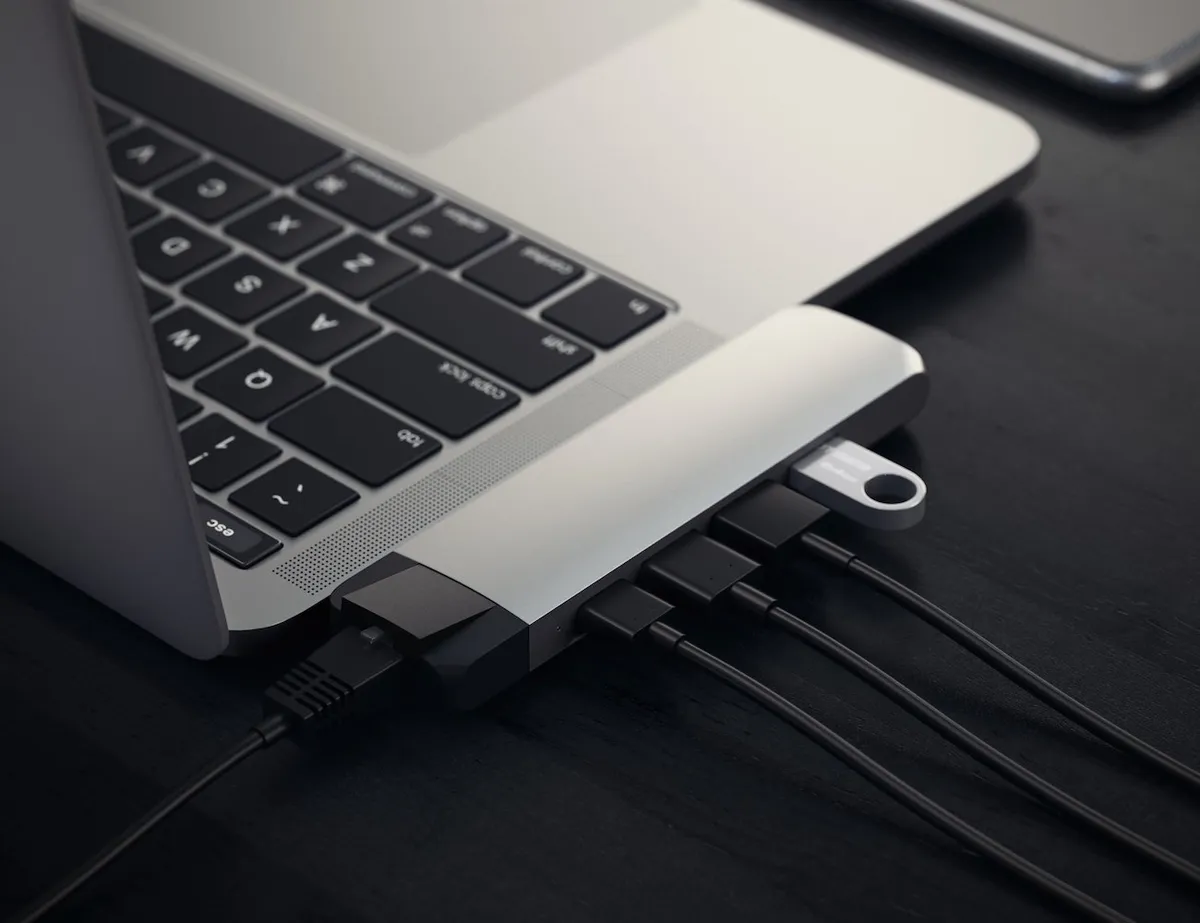
Adapter is a structural design pattern: 🖤🖤🖤🖤🖤
What is Adapter?
Adapter is a set of converters(USB-B to USB-C, USB-A to USB-C, HDMI to USB-C).
Adapter makes it possible for the main device (Macbook) to be connected to incompatible devices (<Printer>, <Flash>, <Monitor>)
Why use Adapter?
It’s all in one converter, neat and clean
Use Adapter:
Question: I hate the Adapter, what are the alternatives?
Answer: You can buy separate converters(USB type B to type C cable, USB type A to type C cable, HDMI to type C cable) for replacement!
Use Many Converters:
When to use Adapter?
Question: When I need a USB type C Adapter?
Answer: When you need to connect Printer, Flash or Monitor to Macbook, right?
Input:
- Having a Macbook, that only have the USB type C port.
- Having incompatible (non-USB type C) devices:
Printer (USB type B)Flash (USB type A)Monitor (HDMI)
# Input 2: Having incompatible (non-USB type C) devices:
class Printer:
    name = "Printer"

    def connect_usb_b(self):
        return f"{self.name} is connected: Printing..."


# Input 2: Having incompatible (non-USB type C) devices:
class Flash:
    name = "Flash"

    def connect_usb_a(self):
        return f"{self.name} is connected: Copying..."


# Input 2: Having incompatible (non-USB type C) devices:
class Monitor:
    name = "Monitor"

    def connect_hdmi(self):
        return f"{self.name} is connected: Displaying..."
Expected Output:
- Making that non-USB type C devices have USB type C port
Printer (USB type C)Flash (USB type C)Monitor (USB type C)
- MacBook is able to connect to those incompatible devices
Printer is connected: Printing...
Flash is connected: Copying...
Monitor is connected: Displaying...
How to implement Adapter?
Non-Adapter implementation:
if __name__ == "__main__":
    devices = [Printer(), Flash(), Monitor()]
    for device in devices:
        if isinstance(device, Printer):
            # Expected Output 2: MacBook is able to connect to those incompatible devices
            print(device.connect_usb_b())
        elif isinstance(device, Flash):
            # Expected Output 2: MacBook is able to connect to those incompatible devices
            print(device.connect_usb_a())
        elif isinstance(device, Monitor):
            # Expected Output 2: MacBook is able to connect to those incompatible devices
            print(device.connect_hdmi())
Adapter Implementation:
class Adapter:
    def __init__(self, obj, **adapted_methods):
        self.obj = obj
        self.__dict__.update(adapted_methods)

    def __getattr__(self, attr):
        return getattr(self.obj, attr)


if __name__ == "__main__":
    devices = []
    printer = Printer()
    # Expected Output 1: Making that non-USB type C devices have USB type C port
    devices.append(Adapter(printer, connect=printer.connect_usb_b))
    flash = Flash()
    # Expected Output 1: Making that non-USB type C devices have USB type C port
    devices.append(Adapter(flash, connect=flash.connect_usb_a))
    monitor = Monitor()
    # Expected Output 1: Making that non-USB type C devices have USB type C port
    devices.append(Adapter(monitor, connect=monitor.connect_hdmi))
    for device in devices:
        # Expected Output 2: MacBook is able to connect to those incompatible devices
print(device.connect())Related posts
Verify vs Cert: The Python Requests Handbook
Understanding SSL/TLS in Python Requests: The 'verify' and 'cert' arguments explained with interactive animations.
SP7 - Proxy - Learn Design Pattern From Simple Things
The boss blocks social media so employees stay focused. That's exactly how the Proxy pattern works - controlling access between objects.
SP6 - Object Pool - Learn Design Pattern From Simple Things
Manufacturing planes is expensive, but raw parts are reused from a pool. That's the Object Pool pattern - reduce creation cost with smart reuse.
SP5 - Facade - Learn Design Pattern From Simple Things
Many departments, one entrance. The Facade pattern simplifies complex systems by exposing only what you need. Learn it from simple everyday things.